Caste system in India
The caste system in India is the paradigmatic ethnographic example of caste. It has origins in ancient India, and was transformed by various ruling elites in medieval, early-modern, and modern India, especially the Mughal Empire and the British Raj.[1][2][3][4] It is today the basis of educational and job reservations in India.[5] It consists of two different concepts, varna and jati, which may be regarded as different levels of analysis of this system.[6]
The caste system as it exists today is thought to be the result of developments during the collapse of the Mughal era and the British colonial regime in India.[1][7] The collapse of the Mughal era saw the rise of powerful men who associated themselves with kings, priests and ascetics, affirming the regal and martial form of the caste ideal, and it also reshaped many apparently casteless social groups into differentiated caste communities.[8] The British Raj furthered this development, making rigid caste organisation a central The caste system in India is the paradigmatic ethnographic example of caste. It has origins in ancient India, and was transformed by various ruling elites in medieval, early-modern, and modern India, especially the Mughal Empire and the British Raj.[1][2][3][4] It is today the basis of educational and job reservations in India.[5] It consists of two different concepts, varna and jati, which may be regarded as different levels of analysis of this system.[6]
The caste system as it exists today is thought to be the result of developments during the collapse of the Mughal era and the British colonial regime in India.[1][7] The collapse of the Mughal era saw the rise of powerful men who associated themselves with kings, priests and ascetics, affirming the regal and martial form of the caste ideal, and it also reshaped many apparently casteless social groups into differentiated caste communities.[8] The British Raj furthered this development, making rigid caste organisation a central mechanism of administration.[7] Between 1860 and 1920, the British segregated Indians by caste, granting administrative jobs and senior appointments only to the upper castes. Social unrest during the 1920s led to a change in this policy.[9] From then on, the colonial administration began a policy of positive discrimination by reserving a certain percentage of government jobs for the lower castes.

The caste system in India is the paradigmatic ethnographic example of caste. It has origins in ancient India, and was transformed by various ruling elites in medieval, early-modern, and modern India, especially the Mughal Empire and the British Raj.[1][2][3][4] It is today the basis of educational and job reservations in India.[5] It consists of two different concepts, varna and jati, which may be regarded as different levels of analysis of this system.[6]
The caste system as it exists today is thought to be the result of developments during the collapse of the Mughal era and the British colonial regime in India.[1][7] The collapse of the Mughal era saw the rise of powerful men who associated themselves with kings, priests and ascetics, affirming the regal and martial form of the caste ideal, and it also reshaped many apparently casteless social groups into differentiated caste communities.[8] The British Raj furthered this development, making rigid caste organisation a central The caste system in India is the paradigmatic ethnographic example of caste. It has origins in ancient India, and was transformed by various ruling elites in medieval, early-modern, and modern India, especially the Mughal Empire and the British Raj.[1][2][3][4] It is today the basis of educational and job reservations in India.[5] It consists of two different concepts, varna and jati, which may be regarded as different levels of analysis of this system.[6]
The caste system as it exists today is thought to be the result of developments during the collapse of the Mughal era and the British colonial regime in India.[1][7] The collapse of the Mughal era saw the rise of powerful men who associated themselves with kings, priests and ascetics, affirming the regal and martial form of the caste ideal, and it also reshaped many apparently casteless social groups into differentiated caste communities.[8] The British Raj furthered this development, making rigid caste organisation a central mechanism of administration.[7] Between 1860 and 1920, the British segregated Indians by caste, granting administrative jobs and senior appointments only to the upper castes. Social unrest during the 1920s led to a change in this policy.[9] From then on, the colonial administration began a policy of positive discrimination by reserving a certain percentage of government jobs for the lower castes.

Gandhi visiting Madras (now Chennai) in 1933 on an India-wide tour for Dalit(he used Harijan) causes. His speeches during such tours and writings discussed the discriminated-against castes of India.

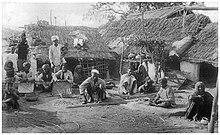
The Basor weaving bamboo baskets in a 1916 book. The Basor are a Scheduled Caste found in the state of Uttar Pradesh in India.
Conclusion
The caste system had a great affect on the Indian society. Despite the fact that it's one of the many types of segregation seen throughout India, it did have its beneficial qualities. For instance, it did establish a stable social order in the country for quite some time until an official government came into place. All of India's people played a role in their society and had certain jobs. The former caste members are now more tolerant of other castes and sub-castes' people, and the divisions in the society are gradually diminishing

